विशेष लेख
Extraordinary Insights into Mars: Surprising Realities of the Red Planet
You might believe you are familiar with the fourth planet from the Sun, but this celestial neighbor holds many secrets. Beyond its iconic rust-colored surface lies a world of extreme geography and fascinating physical properties that challenge our understanding of planetary science.
Daniel Whitman
लेखक
लेख परिचय
नीचे पूरा लेख पढ़ें।
अनुभाग
समाचार
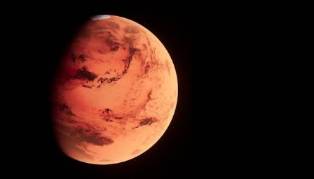
You might believe you are familiar with the fourth planet from the Sun, but this celestial neighbor holds many secrets. Beyond its iconic rust-colored surface lies a world of extreme geography and fascinating physical properties that challenge our understanding of planetary science.
The Seasonal Cycles of Mars
Mars experiences a familiar cycle of spring, summer, autumn, and winter. Much like Earth, the planet is tilted on its axis, meaning different hemispheres receive varying amounts of solar energy as Mars travels along its orbital path. However, because Mars is further from the Sun and has a larger orbit, these seasons last approximately twice as long as those on our home planet. This rhythmic change provides a strange sense of familiarity on an otherwise desolate and alien landscape.
Gravitational Variances
The pull of gravity on the Martian surface is significantly weaker than what we experience on Earth. Specifically, Martian gravity is only about 38% as strong as Earth’s. This disparity is due to the planet’s smaller size; Mars has a diameter nearly 2,000 miles shorter than our own. For future explorers, this would mean significantly less physical strain on the body, though long-term habitation would likely cause human physiology to adapt to the lower requirements for bone and muscle density.
The Compact Size of the Red Planet
In the context of the solar system’s major planets, Mars is relatively tiny. It is not only smaller in diameter but also less massive and less dense than Earth. To put its size into perspective, it would take roughly six Martian globes to equal the total volume of a single Earth.
Extended Annual Cycles
While a year on Earth consists of 365 days, a Martian year is nearly double that length. It takes Mars approximately 687 Earth days to complete one full revolution around the Sun. This means that if you lived on Mars, you would celebrate birthdays only about once every two Earth years.
Periodic Close Encounters
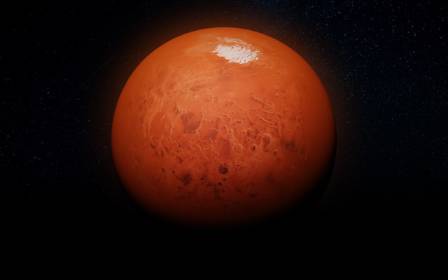
The distance between Earth and Mars is constantly changing due to their different orbital speeds. Roughly every 26 months, the two planets reach a point in their orbits where they are relatively close to one another. During these windows, Mars appears exceptionally bright and distinct in our night sky, offering astronomers and enthusiasts the best possible views of our neighbor.
A Thin and Unique Atmosphere
The atmosphere on Mars is incredibly sparse, possessing a density that is 100 times lower than Earth's. Furthermore, the chemical composition is entirely different; while our air is rich in nitrogen and oxygen, the Martian sky is made almost entirely of carbon dioxide. This thin veil offers very little protection from space radiation and lacks the pressure required for liquid water to remain stable on the surface for long.
Drastic Weight Differences
If you are looking for a rapid change in your physical weight, Mars is the destination for you. Because weight is a measure of gravitational pull on mass, the planet's weak gravity would make a 100-pound person feel as though they weighed only 38 pounds. While your physical mass remains the same, the effort required to move your body would be significantly reduced.
Global Dust Storms
Mars is famous for its volatile weather, specifically its massive dust storms. These events are powered by solar heating; as sunlight hits the arid, red surface, it creates winds that lift fine particles into the air. These storms can sometimes grow to encompass the entire planet, obscured by a shroud of red dust for weeks at a time.
A World Inhabited by Technology
Mars holds the unique distinction of being a planet currently populated exclusively by robots. Humanity has sent several sophisticated rovers—such as Sojourner, Spirit, Opportunity, and Curiosity—to act as our mechanical eyes and ears. These explorers spend their days analyzing soil samples, monitoring the thin atmosphere, and capturing high-resolution images to help scientists determine if the planet could have ever supported life.
Evidence of Liquid Water
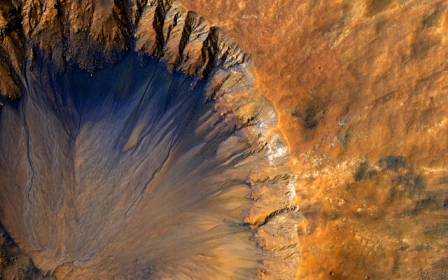
One of the most significant discoveries in recent planetary science is the confirmation of water activity on Mars. Researchers have identified dark, streak-like features in the soil that appear to ebb and flow with the changing seasons. These markings tend to expand during the warmer summer months and retreat during the winter, suggesting that briny water may still flow across the Martian surface under specific conditions. This discovery has fueled hope that Mars may still harbor environments where microbial life could exist.
यह भी पढ़ें

छाया फोटोग्राफी के रहस्यों को जानें
आरव
हेनले सिटीज रिपोर्ट के अनुसार, 2024 में दुनिया के सबसे धनी शहर
मनन

पेशेवर महिलाओं के सूट का रणनीतिक चयन
रामचरण मेहता

Top 10 Highest Mountains in the World
Scarlett Moore

ब्रुकलिन ब्रिज पर कैसे चलें (और इसे मज़ेदार बनाएं)
नैना

10 रंग विकल्प जो छोटे कमरों को बड़ा दिखाएंगे
कवि