विशेष लेख
Everything You Need To Know About Carnations
Carnations, members of the Dianthus genus, are among the world’s most famous and enduring flowers. They have been grown and appreciated by people for more than two thousand years.
Lily Anderson
लेखक
लेख परिचय
नीचे पूरा लेख पढ़ें।
अनुभाग
समाचार
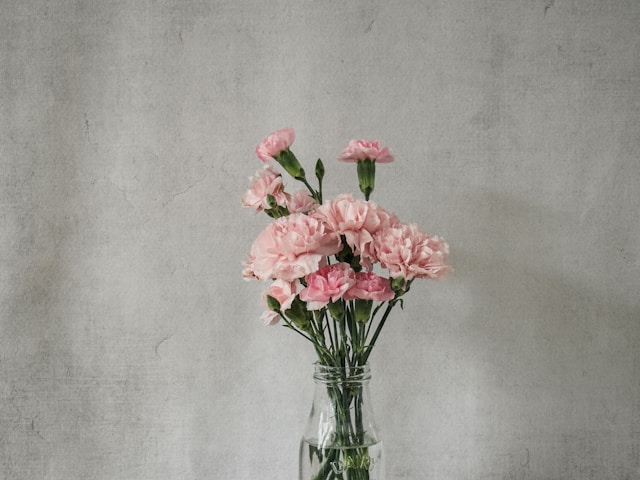
Carnations, members of the Dianthus genus, are among the world’s most famous and enduring flowers. They have been grown and appreciated by people for more than two thousand years.
Known as symbols of love, admiration, and affection, carnations are widely used in bouquets, floral designs, and garden displays. Their bright colors, delicate ruffled petals, and cultural significance have made them a favorite flower for countless occasions. Learning about carnations, including their history, meanings, and varieties, helps reveal why these flowers have remained popular for centuries.
The History of Carnations
The name “carnation” is believed to originate from the Latin word coronatio, meaning “garland” or “crown.” In ancient Greece and Rome, carnations were often woven into ceremonial crowns and decorations.
During the Middle Ages, carnations became common symbols in religious artwork and were frequently linked with the Virgin Mary, representing a mother’s everlasting love. Over the centuries, their symbolism continued to develop across different cultures and historical periods.
During the Victorian era, carnations became an important part of floriography, the language of flowers, where each color carried its own message. Today, carnations still have strong cultural importance. They are recognized as the official Mother’s Day flower in the United States and serve as national flowers in countries including Spain, Monaco, and Slovenia.
Different Types of Carnations
Carnations are available in several major forms, each with unique characteristics and uses.
Standard carnations, also called large-flowered carnations, produce one large flower on each stem and are available in many colors. They are commonly used in bouquets, floral arrangements, and decorative displays.
Mini carnations, also known as spray carnations, produce multiple smaller flowers along each stem. They are popular as filler flowers because they are long-lasting, versatile, and often more budget-friendly.
Dwarf carnations have shorter stems and smaller flowers, making them suitable for garden borders, bedding displays, and compact planting areas.
How Long Do Carnations Last?
Carnations generally have an impressive vase life of about one to two weeks, depending on how fresh they are when cut, the quality of the water, and the surrounding temperature. With proper care, they can remain beautiful even longer.
To extend their lifespan, trim the stems at an angle every few days, replace the water every two days, and keep the flowers away from direct sunlight and heat sources. Adding flower food, removing leaves that sit below the waterline, and keeping carnations away from ripening fruit can also help. Fruits release ethylene gas, which can speed up flower aging.
The Meaning Behind Carnations
Carnations commonly represent love and appreciation, but different colors carry their own special meanings.
Red carnations symbolize strong love, passion, and deep affection. White carnations are associated with purity, innocence, and good fortune. Yellow carnations may represent disappointment or feelings of rejection.
Pink carnations are especially connected with a mother’s love and gratitude, which is why they are strongly associated with Mother’s Day celebrations in both the United States and the United Kingdom.
Carnation Colors and Varieties
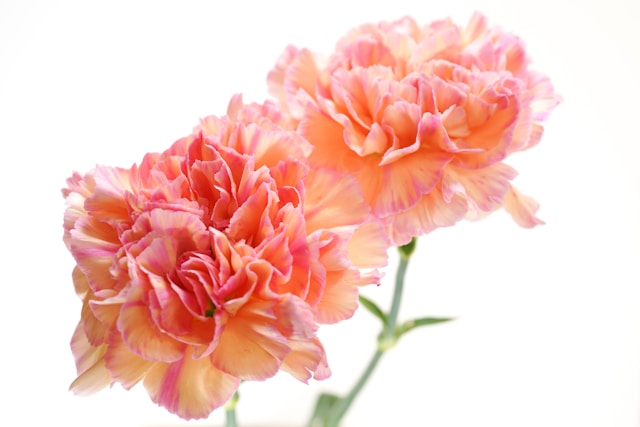
Besides traditional shades such as red, white, yellow, and pink, carnations are also available in orange, purple, and mixed-color varieties.
The red-and-white “Delight” carnation (Dianthus caryophyllus) features white petals decorated with red edges, making it a popular choice for gardens and floral arrangements.
Carnations are also among the easiest flowers to dye because their stems naturally absorb water. White carnations are commonly selected for coloring experiments because their pale petals easily take on new shades.
When Do Carnations Flower?
Carnations typically produce blooms from late spring through early summer, although flowering times vary depending on the variety and growing environment.
Some types, including Malmaison carnations, have longer blooming periods and may continue producing flowers into autumn when growing conditions are suitable.
Are Carnations Safe for Pets?
Carnations are not considered pet-safe. They can be harmful to cats and dogs if eaten.
Pets that consume carnations may experience symptoms such as vomiting, diarrhea, or general stomach discomfort. If a pet has ingested carnations, it is best to contact a veterinarian for advice.
What Do Carnations Smell Like?
Carnations have a distinctive fragrance that varies between varieties. Some types contain eugenol, the same aromatic compound found in cloves, giving the flowers a warm scent similar to cloves or nutmeg.
This fragrance is especially noticeable in traditional varieties such as Dianthus caryophyllus and pink-flowered species including Dianthus plumarius and Dianthus gratianopolitanus.
During the Victorian period, carnations were often used in perfumes because of their pleasant scent. However, many modern florist varieties have been bred mainly for their bright colors, durability, and long vase life, so some may have a lighter fragrance or no noticeable scent at all.

यह भी पढ़ें

मोंटे पैलेस मदीरा गार्डन: पहाड़ों में कला और प्रकृति की दुनिया
आरुषि

The Metropolis That Transformed Global Architecture Forever
Vivienne Ashford

बास्केटबॉल में डिफेंस के 4 प्रकार
सागर
Colourful Macaroons
Jasper Reid

Northern Lights: Sharing the Magic of the Aurora
Isabelle Rowan

Sizzling Asian Seafood Udon Recipe
Lyra Quinn