विशेष लेख
Learn the Basics of Basketball
Basketball is one of the most exciting team sports in the world. It is easy to get started because all you need is a ball, a hoop, a court, and a group of players. While the basic objective is simple, basketball requires a combination of athletic ability, strategy, and teamwork.
Solene Wilde
लेखक
लेख परिचय
नीचे पूरा लेख पढ़ें।
अनुभाग
समाचार
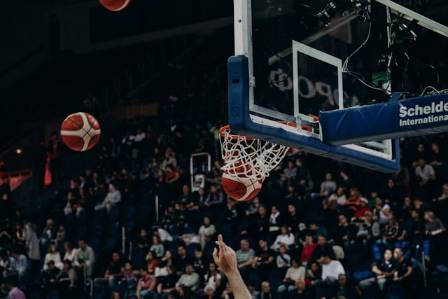
Basketball is one of the most exciting team sports in the world. It is easy to get started because all you need is a ball, a hoop, a court, and a group of players. While the basic objective is simple, basketball requires a combination of athletic ability, strategy, and teamwork.
Players need the endurance to run continuously on both ends of the court, while also making quick decisions and adjusting to different defensive and offensive situations. If you're new to the sport, this guide will introduce the essential concepts you need to understand basketball.
Overview of Basketball
Basketball is played between two teams, with five players from each team on the court at any given time.
The goal is straightforward: score points by putting the ball through the opposing team's basket while preventing the other team from doing the same.
When your team has possession of the ball and attempts to score, it is called offense. When your team works to stop the opposing side from scoring, it is playing defense.
At the end of the game, the team with the higher score wins.
Player Roles and Positions
Although official basketball rules do not require specific positions, modern basketball traditionally divides players into five roles based on their responsibilities and skill sets.
Point Guard (PG)
Often considered the floor leader, the point guard is usually the team's strongest ball handler and playmaker. This player organizes the offense and directs teammates during plays.
Shooting Guard (SG)
The shooting guard is commonly one of the team's best scorers, particularly from long range. They are known for their shooting ability and offensive versatility.
Small Forward (SF)
Small forwards combine speed, athleticism, and scoring ability. They are generally more agile than larger frontcourt players and contribute on both offense and defense.
Power Forward (PF)
Power forwards typically use their strength and physicality near the basket. They often help with rebounding, interior scoring, and defending bigger opponents.
Center (C)
The center is usually the tallest player on the team. Their responsibilities often include protecting the rim, grabbing rebounds, and scoring close to the basket.
These positions are also commonly labeled numerically:
Point Guard = 1
Shooting Guard = 2
Small Forward = 3
Power Forward = 4
Center = 5
As basketball continues to evolve, players are becoming more versatile, and traditional position roles are less rigid than they once were.
The Basketball Court
A basketball court features a basket at each end and several marked areas that define gameplay.
Court Dimensions
NBA and NCAA courts measure:
94 feet long
50 feet wide
International competitions governed by FIBA use courts measuring:
28 meters long (approximately 92 feet)
15 meters wide (approximately 49 feet)
Boundary Lines
The court is enclosed by:
Sidelines along the length of the court
Endlines behind each basket
Any player or ball that crosses these boundaries is considered out of bounds.
Half-Court Line
A line across the middle of the court separates the:
Backcourt (defensive side)
Frontcourt (offensive side)
Free Throw Line
The free throw line is located 15 feet from the basket and is used when players are awarded free throws after certain fouls.
Three-Point Line
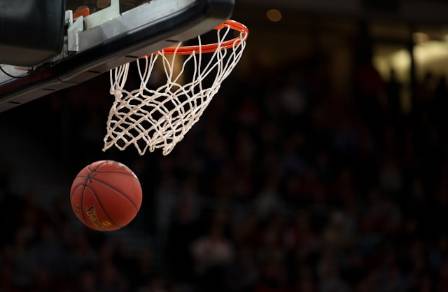
An arc surrounding each basket marks the three-point area.
Shots made from outside this line are worth three points.
Shots made inside the arc count as two points.
Team Structure
Professional teams generally carry up to 15 players on their roster.
In the NBA, only a limited number of those players can be active for a game. Regardless of roster size, only five players per team may be on the court at one time.
Substitutions
Teams can replace players throughout the game whenever play is stopped, such as during timeouts or after a whistle from the officials.
Uniforms
Each team wears designated uniforms to distinguish itself from the opponent.
Typically:
One team wears darker colors.
The other team wears lighter colors.
Players must display their numbers on both the front and back of their jerseys so officials can easily identify them.
Team Captain
Every team appoints a captain who serves as the primary representative between players and officials.
The captain often communicates with referees regarding rule interpretations, disputes, or other game-related matters.
Game Format and Timing
NBA Structure
NBA games consist of:
Four quarters
Each quarter lasts 12 minutes
NCAA Structure
College basketball uses:
Two halves
Each half lasts 20 minutes
Overtime
If the score remains tied at the end of regulation, an additional period known as overtime is played.
Each overtime period lasts five minutes and continues until a winner is determined.
Jump Ball
The game begins with a jump ball at center court.
A referee tosses the ball into the air while one player from each team attempts to gain possession.
Basic Ball Movement
Basketball is played primarily with the hands.
Players may:
Pass
Dribble
Throw
Tap
Roll the ball
Using feet or fists to intentionally move the ball is prohibited.
Common Violations
Violations occur when players break certain rules of the game.
The usual penalty is loss of possession.
Out-of-Bounds
A player with possession of the ball must remain within the court boundaries.
Stepping outside the lines results in a turnover.
Traveling
Players must dribble while moving.
Taking steps without dribbling is called traveling and results in a violation.
Offensive Three Seconds
An offensive player may not remain inside the restricted lane area for more than three consecutive seconds.
This rule applies only to offensive players.
Shot Clock Violations
Teams have a limited amount of time to attempt a shot.
NBA: 24 seconds
NCAA: 30 seconds
Failure to attempt a shot within this period results in a turnover.
Goaltending
Players may not interfere with a shot that is descending toward the basket.
Doing so results in a goaltending violation.
Fouls
Fouls are among the most common infractions in basketball.
Personal Fouls
A personal foul occurs when a player illegally hinders an opponent through physical contact.
Examples include:
Blocking
Holding
Pushing
Hitting
Foul Limits
Players can only commit a certain number of personal fouls before being disqualified.
NBA: 6 fouls
NCAA: 5 fouls
Technical Fouls
Technical fouls involve unsportsmanlike behavior rather than physical contact.
Examples include:
Arguing excessively with officials
Using inappropriate language
Fighting
Delaying the game
Team Fouls and Free Throws
Teams accumulate fouls throughout the game.
Team Foul Limits
NBA teams enter a penalty situation after:
Five team fouls in a quarter
NCAA teams enter the bonus after:
Seven fouls in a half
Free Throws
A free throw is an uncontested shot worth one point.
Players are awarded free throws when certain fouls or violations occur.
Substitutions and Officials
Teams may substitute players as often as they choose, provided that no more than five players from one team are on the court simultaneously.
Game officials are responsible for enforcing the rules and maintaining order.
Players and coaches are expected to communicate respectfully with referees. Excessive complaints or unsportsmanlike conduct can result in penalties.
Conclusion
Basketball combines athleticism, strategy, teamwork, and skill into one exciting sport. Understanding the basic rules, player roles, court layout, and game structure makes it much easier to enjoy both playing and watching the game.
Whether you're stepping onto the court for the first time or simply trying to learn more about the sport, mastering these fundamentals is the first step toward becoming a knowledgeable basketball fan or player.
Keep practicing, continue learning, and most importantly, enjoy the game.

यह भी पढ़ें
दुनिया के 5 सबसे जिज्ञासु जानवरों का रहस्योद्घाटन
सुमन

Essential Rules for Scuba Diving and Freediving
Isolde Quinn

चार ऋतुएँ: प्रकृति के बदलते चक्रों की सुंदरता और आश्चर्य की सराहना
विनय

The Most Impressive Electric Vehicles of 2025: Your Ultimate Buying Guide
Zoe Campbell

घाटी की लिली (कॉन्वेलरिया मजलिस): इसका क्या मतलब है? इसे कैसे लगाया जाए? क्या यह ज़हरीली है?
जय

Fun facts about horses
Brianna Hayes