विशेष लेख
The Most Variable and Historic Deer
Among the diverse family of cervids, the fallow deer stands out for its remarkable color variations, unique physical characteristics, and ancient relationship with humans. This elegant species has traveled far beyond its native eastern Mediterranean habitats to establish itself across all inhabited continents, creating a living legacy that spans millennia. From its distinctive appearance to its fascinating behaviors, the fallow deer represents one of nature's most adaptable and historically significant ungulates.
Ashley Thompson
लेखक
लेख परिचय
नीचे पूरा लेख पढ़ें।
अनुभाग
समाचार
Among the diverse family of cervids, the fallow deer stands out for its remarkable color variations, unique physical characteristics, and ancient relationship with humans. This elegant species has traveled far beyond its native eastern Mediterranean habitats to establish itself across all inhabited continents, creating a living legacy that spans millennia. From its distinctive appearance to its fascinating behaviors, the fallow deer represents one of nature's most adaptable and historically significant ungulates.
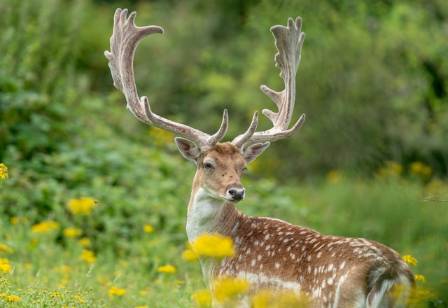
A Spectrum of Coat Colors
The fallow deer exhibits one of the most diverse color palettes in the deer family, with approximately fourteen documented variations ranging from pure white through various shades of reddish-brown to nearly black. Some adults maintain their juvenile spotted patterns throughout their lives, while others develop solid coloration. Remarkably, fawns maintain their birth coloration permanently, creating populations with dramatically different appearances living side by side. This extraordinary variation provides both aesthetic beauty and practical advantages in different environments.
Distinctive Markings and Antlers
The fallow deer's most recognizable feature is its white rump patch, which serves as a critical communication tool. When alarmed, the deer erects these white hairs and raises its tail, creating a flashing warning signal that alerts other deer to potential danger. The bucks carry the most distinctive antlers in the Old World deer family—palmated structures that are broad and flattened at the ends with multiple short tines. These unique antlers, not found in any other Old World deer species, represent both an impressive display feature and an effective combat tool during mating season.
Unique Escape Adaptations
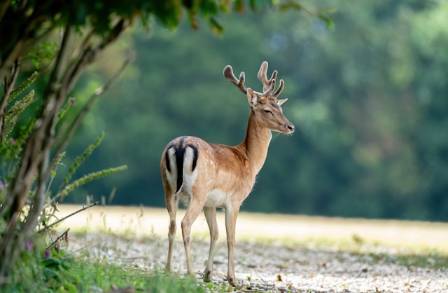
When threatened by predators, fallow deer employ a distinctive escape strategy known as "stotting"—a stiff-legged jumping and running motion that may signal fitness to predators or help navigate rough terrain. Their varied coat colors provide effective camouflage once they reach forested areas, allowing them to blend seamlessly into dappled light and shadow patterns. This combination of alert signaling and adaptive concealment demonstrates their sophisticated survival strategies.
Flexible Feeding Ecology
Fallow deer exhibit remarkable dietary flexibility, feeding primarily in open grassy areas while requiring nearby tree cover and undergrowth for shelter and protection. Their feeding behavior adapts to local conditions, with populations shifting between grazing and browsing depending on food availability. When resources permit, they show preference for herbs and foliage, though they readily consume woody browse and grasses when necessary. This nutritional adaptability has contributed significantly to their successful establishment in diverse environments worldwide.
A Long History with Humans
Unlike most deer species, truly wild fallow deer populations are exceptionally rare even in their native range. Most exist in semi-domesticated states, making them the most widely kept deer species globally. Their historical relationship with humans dates back to ancient civilizations, particularly the Roman Empire, whose conquering armies transported fallow deer herds across Europe as mobile food sources. These transplanted populations established the foundation for the species' global distribution, creating a living historical record of human migration and cultural exchange.
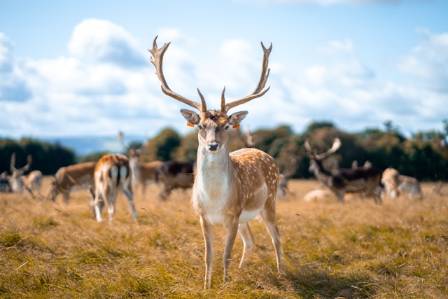
The fallow deer's story is one of beautiful variation and enduring partnership with humanity. From their spectacular array of coat colors to their unique physical adaptations and ancient connection to human civilization, these deer continue to captivate observers worldwide. Their successful establishment across continents stands as a testament to their adaptability and the enduring relationship between humans and wildlife that has shaped both natural and cultural landscapes for thousands of years.
यह भी पढ़ें

Sizzling Asian Seafood Udon Recipe
Lyra Quinn

The Secrets Behind Why Wild Rodents Love Running On Wheels Just Like Your Pet Hamster
Carter Amelia

कंप्यूटर के इतिहास पर बच्चों के लिए एक बेहतरीन गाइड
दिव्या

प्रयोगशाला की पहली चिंगारी
डैनियल व्हिटमोर

प्रत्येक गतिविधि के लिए आदर्श महिला खेल परिधान चुनने के सिद्धांत
ओम प्रकाश चावड़ा

दुनिया भर में टॉप 3 बेहतरीन आलू चिप ब्रांड्स
कृति