← मुखपृष्ठ3 मिनट का पाठ
विशेष लेख
The World's Largest Turtle: A New Chapter
The leatherback turtle now exhibited at National Museum Cardiff first came to public attention in September 1988, when it was found stranded on Harlech beach in Gwynedd.
L
Lee
लेखक
लेख परिचय
नीचे पूरा लेख पढ़ें।
अनुभाग
समाचार
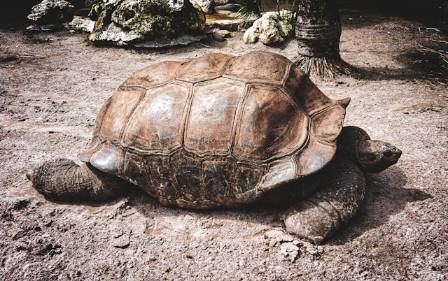
The leatherback turtle now exhibited at National Museum Cardiff first came to public attention in September 1988, when it was found stranded on Harlech beach in Gwynedd. The animal had tragically died after becoming entangled in fishing gear, cutting short a life estimated at nearly a century. Its size captured global interest—at close to 3 meters long and weighing 914 kilograms, it remains the largest and heaviest turtle ever documented.
The discovery prompted immediate action from museum staff, who were eager to preserve and display such an extraordinary specimen. Yet presenting an animal of this scale posed considerable technical challenges.
Preparing a Record-Holding Specimen
Following a post-mortem examination to gather scientific data, the turtle’s skin was carefully removed and treated for preservation. A mold was created from its body shape, over which the preserved skin was meticulously fitted to recreate a natural posture.
The skeleton was also prepared and mounted alongside the full-body display. Together, they were installed in a dedicated gallery, accompanied by educational material detailing the leatherback’s biology, the dangers it faces, and ongoing conservation efforts.
A Display Tested by Time
After sixteen years on view, the specimen began to show serious cracking. Although earlier repairs had addressed minor damage, persistent low humidity in the gallery worsened its condition. With no alternative, the exhibit was closed to allow for comprehensive restoration.
Conservation started with a thorough cleaning to remove years of accumulated dust and oily residues, using a gentle, non-ionic detergent.
Once cleaned, the next step was relaxing and reshaping areas that had warped or contracted. This was achieved by carefully applying a solution of deionised water, salt, and detergent to the surface, allowing conservators to gradually ease the skin back into its original position.
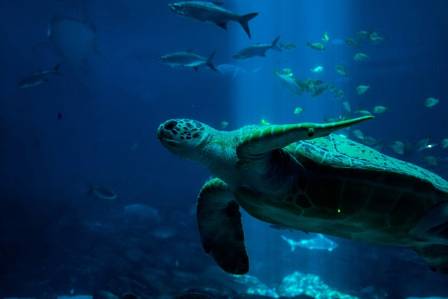
Addressing Past Repairs
After drying, earlier restorations were painstakingly removed—a delicate and time-consuming process to avoid further harm to the fragile skin. Much of the surface had also been previously painted black, which was now stripped away using acetone and a fume extraction system.
With old fillers and paint removed, the turtle’s natural patterning and skin texture became visible again. New gaps and splits were then filled and colored to match the original appearance as closely as possible.
Return to View
The skeleton received similar careful cleaning before the fully restored turtle was reinstalled in its mounting. Four months of detailed work allowed the gallery to welcome visitors once more.
A Change of Setting
Despite these efforts, environmental conditions in the original space continued to threaten the turtle’s preservation. In 2006, it was moved to a new home within the adjoining “Man and the Environment” gallery, positioned near the humpback whale specimen. This space offers more stable temperature and humidity, permitting the turtle to remain on permanent display.
Updated interpretation panels provide current information about leatherbacks and their conservation. Now peacefully positioned in its new setting, this remarkable turtle continues to inspire and educate, serving as both a memorial to a magnificent life and a lasting symbol of our shared responsibility toward marine giants.
यह भी पढ़ें
en
Exploring Chicago's Artistic Marvels: A Showcase of 3 Captivating Murals
Liam Thompson

hi
घोड़े महान पालतू जानवर क्यों हैं: अश्व साथीपन के आनंद की खोज
रोहिणी

en
Top 9 Family-Friendly Dog Breeds for Adoption
Samantha
en
Cycling at the Beach
Isabella Carrington

hi
स्वेटशर्ट शैलियों के लिए आवश्यक गाइड: प्रकारों, फिट और विशेषताओं की तुलना
सोनल राजपूत
hi
दुनिया के 6 सबसे खूबसूरत गुलाब
भरत