विशेष लेख
Understanding How Modern Satellite Communication Operates
A satellite travels around the Earth along a round or oval trajectory. These flight paths usually range from 160 kilometers up to 35,800 kilometers in altitude. Transmitting signals through space demands an unobstructed line of vision between the spacecraft and a ground station or user terminal. The visible area on the ground changes based on the altitude and location of the orbital spacecraft. Engineers group these orbital positions into three primary categories known as low Earth orbit, medium Earth orbit, and geostationary Earth orbit.
Maya Thompson
लेखक
लेख परिचय
नीचे पूरा लेख पढ़ें।
अनुभाग
समाचार
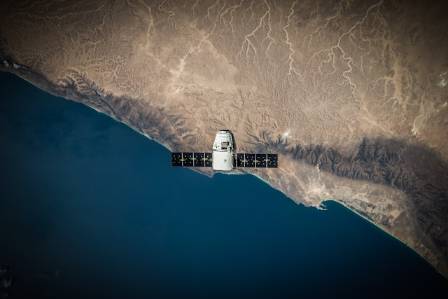
A satellite travels around the Earth along a round or oval trajectory. These flight paths usually range from 160 kilometers up to 35,800 kilometers in altitude. Transmitting signals through space demands an unobstructed line of vision between the spacecraft and a ground station or user terminal. The visible area on the ground changes based on the altitude and location of the orbital spacecraft. Engineers group these orbital positions into three primary categories known as low Earth orbit, medium Earth orbit, and geostationary Earth orbit.
Transmission of Signals Through Radio Frequency Waves
Satellites send digital data across space using electromagnetic radio waves. This aerial approach brings high grade connectivity to isolated regions without requiring costly ground infrastructure. The choice of wave frequency plays a critical role in system performance.
Higher signal frequencies provide broader bandwidth allocations. Larger bandwidths allow faster transfer speeds and higher overall throughput. However, these elevated frequencies suffer greater signal degradation from rain and atmospheric interference.
Several specific frequency bands support orbital communications. The Ku and Ka bands span from 10 to 31 gigahertz. Operators rely on these bands for television streams, private network connections, maritime links, and aviation services. The C band operates between 4 and 6 gigahertz. Broadcasters and telecom operators use it for voice and data delivery in regions with heavy rainfall. The L band covers 1.5 to 1.6 gigahertz and powers portable equipment like handheld satellite telephones. Its narrow bandwidth creates strict limits on maximum data throughput. The X band ranges from 8 to 12 gigahertz and primarily serves military and defense networks.

Key Orbital Positions and Global Coverage
Low Earth orbit reaches altitudes up to 2,000 kilometers above the planet. Medium Earth orbit extends from 2,000 kilometers out to 36,000 kilometers. Geostationary Earth orbit rests around 36,000 kilometers above the surface.
A spacecraft in geostationary orbit travels directly above the equator. Its flight pace matches the rotational speed of the planet perfectly. Ground observers perceive the spacecraft as a stationary object in the sky. A single geostationary spacecraft oversees nearly one third of the globe. Four positioned spacecraft can cover the entire planet. Consequently, geostationary spacecraft handle over 90 percent of global satellite communications.
Blurring Lines in Historical Communication Markets
Traditionally, the satellite telecommunications industry operated across two distinct categories. These divisions were fixed satellite services and mobile satellite services.
Today, the distinction between these two markets is fading rapidly. Increased funding for flexible steerable antenna beams and compact mobile terminals is transforming the landscape. Industry observers expect this integration trend to keep accelerating in the coming years.

यह भी पढ़ें

प्लाज़ा डे एस्पाना
आदित्य

रोसी से लेकर रूंबा तक, स्वायत्त रोबोट विज्ञान कथा को जीवन में लाते हैं
अनया

Interesting Facts About Four Leaf Clovers for Saint Patricks Day
Robert Andrew Johnson

पेशेवर महिलाओं के सूट का रणनीतिक चयन
रामचरण मेहता

How to Style a Hoodie Like a True Fashion Pro This Spring
Olivia

टी+एल संपादकों और योगदानकर्ताओं के अनुसार, दुनिया भर में 10 सर्वश्रेष्ठ स्की रिसॉर्ट्स
स्टेसी लीसा