विशेष लेख
Most Popular Musical Instruments: Best for Beginners and Professionals
Learning a musical instrument offers countless benefits, whether for yourself or your child. Music enhances creativity, builds social connections, and allows people to communicate through the universal language of sound.
Evangeline Moore
लेखक
लेख परिचय
नीचे पूरा लेख पढ़ें।
अनुभाग
समाचार
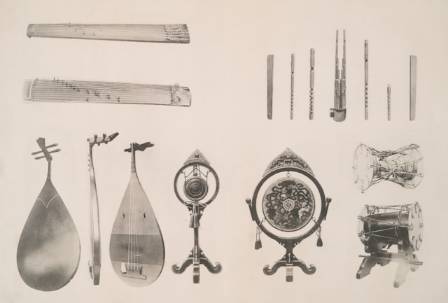
Learning a musical instrument offers countless benefits, whether for yourself or your child. Music enhances creativity, builds social connections, and allows people to communicate through the universal language of sound.
This guide lists the ten most popular instruments, considering factors like accessibility, cost, versatility, and potential career paths. Whether you’re choosing an instrument to suit your personality or exploring music professionally, this guide has options for everyone. Beginners will also find suitable instruments to match their skill level. Each entry includes history, sound characteristics, and common uses.
10. Harp
The harp is a stringed instrument found in many cultures throughout history. Renowned for its resonant, melodic tones, the harp has been featured in various musical styles. Its slender frame and lyrical sound have made it a timeless cultural icon. While its harmonic structure remains relatively consistent, advances in materials, stringing, and pedals have expanded its possibilities.
Age from: 8 years
Difficulty: Medium
Popularity
-
Middle Ages: Central to European court music, accompanying singers and dancers.
-
Renaissance: Widely used as a solo instrument with dedicated compositions.
-
19th–early 20th centuries: Mostly reserved for classical music.
-
Late 20th century: Integrated into folk, world, and jazz music.
Uses
The harp complements vocal performances and melodic solos. It has been played across Africa, Asia, Europe, and the United States.
9. Trumpet
The trumpet is a brass instrument with a long history, used in religious, ceremonial, and military contexts. It is highly versatile, appearing in jazz, classical, pop, and marching ensembles. Compact and portable, it appeals to young musicians who enjoy both sound and performance presence.
Age from: 8 years
Difficulty: Medium
Popularity
-
Central to jazz, rock, pop, and classical music.
-
Featured in orchestras, marching bands, and brass ensembles.
-
Heard in various genres, including reggae, ska, and EDM.
Uses
Historically used for ceremonies, hunting, and military events, and appears in compositions by Haydn, Vivaldi, and Mozart.
8. Violin
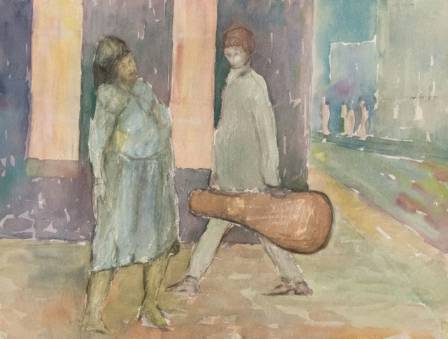
The violin is a highly versatile string instrument, featured in classical, rock, country, bluegrass, and jazz music. Suitable for children from age four, it is an excellent starter instrument. Early lessons teach string techniques, listening skills, and basic musical concepts.
Age from: 4 years
Difficulty: Medium
Popularity
-
The most widely played instrument globally.
-
Popular among children as young as three.
-
Integral to orchestras since the 1600s.
Uses
-
Orchestras and chamber music, often carrying the melody.
-
Folk music, including bluegrass, country, and Indian traditions.
-
Jazz, rock, and solo performances.
7. Cello
The cello has gained popularity for its rich, warm tone. It appears in orchestras, string quartets, and chamber groups, offering both melodic and bass-line capabilities. Slightly larger than the violin, it remains accessible to beginners.
Age from: 8 years
Difficulty: Medium
Popularity
-
Popularized through crossover genres and rock music.
-
Its expressive sound resembles the human voice.
Uses
-
Orchestras, string quartets, and chamber ensembles.
-
Solo performances and pop music.
6. Flute
The flute is an excellent beginner woodwind instrument. Affordable, portable, and relatively easy to play, it introduces students to group music settings. Advanced flutes are often made of precious metals and produce rich tones.
Age from: 6 years
Difficulty: Easy
Popularity
-
Existed since 900 B.C., originating in China.
-
Played widely by both genders in orchestras and bands.
Uses
Employed in orchestras, concert bands, jazz, folk, world music, and solo performances.
5. Ukulele
The ukulele is a cheerful, beginner-friendly string instrument. Small and lightweight with four nylon strings, it is ideal for children and promotes finger dexterity. Its simple chords make it perfect for songwriting, solo play, or accompaniment.
Age from: 5 years
Difficulty: Easy
Popularity
-
Originated in Hawaii in the late 19th century, inspired by Portuguese instruments.
-
Gained popularity in schools, replacing recorders in many programs.
Uses
-
Songwriting and accompaniment.
-
Solo playing and music lessons.
-
Stress relief through music engagement.
4. Drums
Drums are essential in many music genres and provide a dynamic, physically active way to make music. While challenging for beginners, especially coordinating limbs, modern classes and electronic drum sets make learning more accessible.
Age from: 6 years
Difficulty: Difficult
Popularity
-
Among the oldest instruments worldwide, present in religious and cultural ceremonies.
-
Central to most music genres, from classical to pop.
Uses
-
Rhythm foundation for songs.
-
Orchestras, music production, and live performances.
-
Disco, rap, reggae, religious services, and parades.
3. Tabla
The tabla is a prominent North Indian percussion instrument, versatile across multiple music styles. Traditionally used in Hindustani classical music, it can accompany vocals, other instruments, or be played solo.
Age from: 6 years
Difficulty: Medium
Popularity
-
Key instrument in India, Pakistan, and Bangladesh.
-
Developed from earlier drums like naqqara, dholak, and pakhawaj.
Uses
-
Accompanies songs, dances, and vocalists.
-
Solo performances and improvisations in classical music.
-
Supports devotional practices and ensemble recitals.
2. Guitar
The guitar is versatile, affordable, and portable. Acoustic, electric, and bass variations allow players to perform across genres. While chords may take time to master, beginners can play simple tunes early on.
Age from: 6 years
Difficulty: Difficult
Popularity
-
Multi-purpose instrument for rock, country, and pop.
-
Social instrument, often played around gatherings.
Uses
-
Rhythm, lead, and bass lines.
-
Solo play and music therapy.
1. Piano/Keyboard
The piano is highly popular among beginners due to its accessibility and versatility. Starting as early as age five, students can learn basic melodies, scales, and music theory. The piano spans nearly all genres and supports both solo and ensemble play.
Age from: 5 years
Difficulty: Easy
Popularity
-
One of the most played instruments globally, with over 21 million American players.
-
Widespread in China and became common in Europe and North America in the 19th–20th centuries.
Uses
-
Piano solos, choirs, and accompaniment.
-
Practice and performance across multiple music genres.
These ten instruments provide a solid starting point for learning music, offering both historical insight and practical benefits for beginners and advanced players alike.
यह भी पढ़ें
दुनिया भर में मुख्य भोजन
अरुण

Embracing the Work-Leisure Revolution: A Guide to Effortless Transition
Grace Evelyn
Autumn Cabin Acrylic Painting
Clara Winslow
पाँच प्रजातियाँ जो बेहतरीन इनडोर बोनसाई बनाती हैं
प्रतीक
एथनिक वियर चुनने के लिए एक व्यापक गाइड: फिटिंग, फैब्रिक और स्टाइल
किशोर मिश्र
मिरांडा
अमर