← मुखपृष्ठ6 मिनट का पाठ
विशेष लेख
The Architecture of Ascent: A Comprehensive Guide to Choosing the Perfect Staircase
A staircase is far more than a utilitarian passage between floors; it is the spine of your home’s architecture. It can serve as a commanding focal point or a subtle connector, marrying structural necessity with aesthetic ambition. With countless configurations and styles available, selecting the right staircase is a pivotal decision that impacts your home’s flow, safety, and visual identity. This guide offers a side-by-side comparison to help you navigate the options, from spatial configurations to decorative finishes.
E
Ethan Martin
लेखक
लेख परिचय
नीचे पूरा लेख पढ़ें।
अनुभाग
समाचार
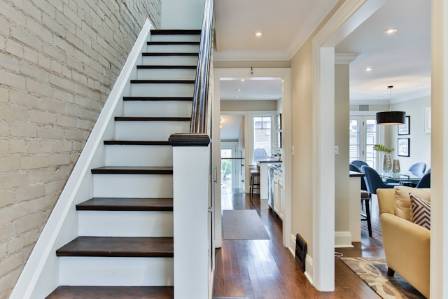
A staircase is far more than a utilitarian passage between floors; it is the spine of your home’s architecture. It can serve as a commanding focal point or a subtle connector, marrying structural necessity with aesthetic ambition. With countless configurations and styles available, selecting the right staircase is a pivotal decision that impacts your home’s flow, safety, and visual identity. This guide offers a side-by-side comparison to help you navigate the options, from spatial configurations to decorative finishes.
Common Staircase Configurations: Form and Function
1. The Straight Run
The epitome of classic simplicity, a straight staircase is a single, uninterrupted flight of steps. It is the most economical to build due to its straightforward engineering and is exceptionally user-friendly for moving furniture.
-
Best For: Homes with elongated layouts, such as shotgun houses, lofts, or spacious foyers.
-
Considerations: Requires significant linear space and offers less privacy between floors. The absence of a landing means a fall can be more hazardous, prompting some families to seek alternatives.
2. The L-Shaped (Quarter-Turn)
Featuring a 90-degree pivot at a landing, this design fits snugly into corners, breaking the monotony of a long climb. The landing provides a natural pause and an opportunity to introduce natural light or artwork.
-
Best For: Suburban homes or layouts where a direct vertical path would disrupt living spaces.
-
Considerations: Slightly more complex and costly to construct. The corner turn can pose challenges when maneuvering large furniture pieces.
3. The U-Shaped (Half-Turn)
This design executes a 180-degree turn, stacking two parallel flights around a central landing. It is a hallmark of architectural elegance, offering a grand transition while conserving horizontal floor space.
-
Best For: Multi-story townhouses, narrow lots, or homes aiming for a dramatic central feature.
-
Considerations: Requires robust structural support for the landing, increasing build time and cost. The enclosed nature may feel restrictive without adequate lighting.
4. The Spiral Staircase
Winding tightly around a central column, the spiral staircase is the ultimate space-saver. It offers a sculptural, European-inspired aesthetic that serves as a functional art piece.
-
Best For: Compact lofts, cottages, or as secondary access to attics where square footage is at a premium.
-
Considerations: Steep, narrow treads can be difficult for daily use, moving furniture, or for individuals with mobility issues. Building codes often restrict their use as a primary staircase.
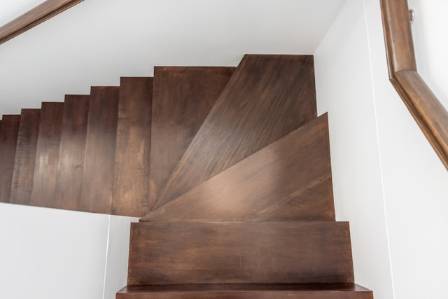
5. The Winder Staircase
Utilizing pie-shaped treads to navigate a turn without a full landing, winders offer a fluid, space-efficient transition. They lend a charming, old-world character to a home.
-
Best For: Older homes, European-style cottages, or creative remodels where a landing would encroach on living space.
-
Considerations: The angled treads can be less intuitive to navigate. They often require custom carpentry to meet safety codes and may feel tight for frequent use.
Matching the Staircase to Your Lifestyle
-
Second-Story Additions: A straight staircase with open, streamlined railings maintains a light, airy feel. For noise reduction, an L-shaped or U-shaped design with a mid-landing acts as a sound buffer.
-
Basement Access: Prioritize safety with closed-riser straight stairs, non-slip treads, and robust railings. Motion-sensor lighting is crucial for navigating dimly lit lower levels.
-
Attic Conversions: Winder stairs are ideal for hugging perimeter walls. In very tight spaces, a spiral staircase is a viable alternative, but ensure treads have anti-slip finishes.
-
Aging in Place: Opt for straight or U-shaped stairs with deep, low-profile treads and continuous, easy-grip handrails on both sides. High-contrast finishes and integrated LED step lighting enhance visibility.
-
Families with Children: L-shaped or U-shaped stairs with landings provide natural supervision points. Choose durable, wipeable surfaces, rounded banisters, and closely spaced balusters to prevent climbing. A low-pile runner adds crucial traction.
-
Limited Square Footage: Spiral, U-shaped, or winder stairs are essential space-savers. Pair them with slim-profile railings and wall-mounted grips to maintain a sense of openness.
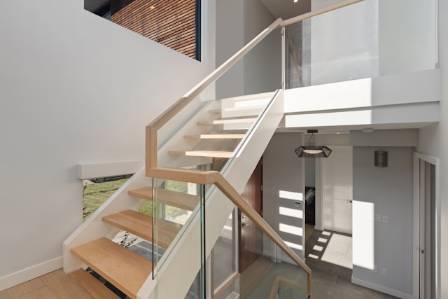
Aesthetic Styles: Defining Your Home’s Character
-
Floating Stairs: Create a breathtaking, minimalist effect where treads appear to hover in mid-air, supported by hidden hardware. Ideal for contemporary homes, though engineering complexity and cost are higher.
-
Traditional Stairs: Exude timeless warmth with carved wood newels, turned balusters, and plush runners. Perfect for historic or transitional homes, but can feel visually heavy in modern, compact spaces.
-
Industrial Stairs: Celebrate raw materials like exposed steel, iron mesh, and reclaimed timber. They bring an urban loft vibe but can be noisy and feel cold without soft furnishings.
-
Rustic Farmhouse Stairs: Showcase chunky, reclaimed wood and honest joinery for a cozy, lived-in feel. Best suited for cabins or country homes, though the visual weight can overwhelm minimalist interiors.
-
Modern Minimal Stairs: Adhere to a "less is more" philosophy with thin profiles, streamlined railings, and neutral finishes. They excel in open-concept designs but may show scuffs easily and lack the sound-dampening qualities of traditional styles.
Decorative Details: The Finishing Touch
Simple & Sophisticated:
-
Color-Blocked Depth: Paint risers a contrasting color to the natural wood treads.
-
Understated Railings: Matte black, brushed steel, or classic white finishes suit any decor.
-
The Classic Runner: A subtle stripe or solid rug adds comfort, color, and significantly reduces noise.
-
Strategic Lighting: Discreet step or wall lights enhance safety and ambiance.
Upscale & Artistic:
-
Artisan Balusters: Smoked glass or intricately crafted iron spindles add a custom, airy feel.
-
Waterfall Treads: Continuous wood treads that wrap elegantly around the stringer highlight fine craftsmanship.
-
Integrated LEDs: Illuminate the underside of treads or the handrail for a soft, luxurious glow.
-
Feature Walls: Apply wainscoting, bold murals, or oversized art along the stairwell.
-
Accent Risers: Use patterned stone or colorful tiles on the risers for a hidden pop of personality.
-
Color Drenching: Paint the banister, trim, and surrounding walls in a single bold hue for a dramatic, cohesive statement.
The Path Forward
Choosing a staircase is a balance of structural integrity, daily practicality, and personal style. Collaborating with an experienced contractor is essential to navigate building codes and structural requirements. The ideal staircase does more than connect floors—it elevates your home’s design, enhances its functionality, and stands as a testament to thoughtful architecture for years to come.
Pro Tip: When planning your staircase, always consider the "rise" (height of each step) and "run" (depth of each tread). A comfortable ratio is key to preventing trips and ensuring the stairs feel natural underfoot. A general rule is that the sum of two risers and one run should equal approximately 24-25 inches.
यह भी पढ़ें

hi
पृथ्वी से मिल्की वे कैसे देखें: सभी जानकारी
एशा
hi
दुनिया के सबसे अच्छे गांव कौन से हैं?
समीर
en
Creamy Homemade Vanilla Pudding
Easton Wright

en
A Culinary Journey: 15 Iconic Chinese Dishes
Michel Chen

hi
दानेदार अनाज के विविध लाभ
आकांक्षा
hi
टॉप 15 ट्रैम्पोलिन पार्क – दुनिया के सबसे अच्छे ट्रैम्पोलिन पार्क
आरव