← मुखपृष्ठ5 मिनट का पाठ
विशेष लेख
The Quiet Luxury Table: Designing a Warm Minimalist Dining Room for 2026
The minimalist dining room of 2026 has shed its reputation as a sterile, white void. Today, it represents a sanctuary of calm—a space designed for dining, working, hosting, and unwinding without the burden of visual clutter. This new era embraces "warm minimalism": fewer pieces, superior quality, and a tactile "quiet luxury" aesthetic. This guide explores how to achieve a space that feels both effortless and elevated, focusing on layout, materials, and mindful styling.
T
Theodore Brown
लेखक
लेख परिचय
नीचे पूरा लेख पढ़ें।
अनुभाग
समाचार
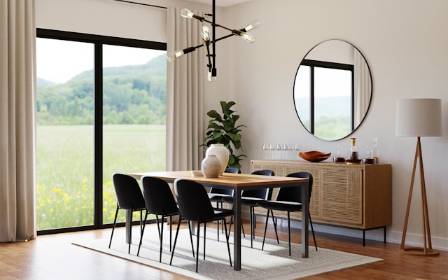
The minimalist dining room of 2026 has shed its reputation as a sterile, white void. Today, it represents a sanctuary of calm—a space designed for dining, working, hosting, and unwinding without the burden of visual clutter. This new era embraces "warm minimalism": fewer pieces, superior quality, and a tactile "quiet luxury" aesthetic. This guide explores how to achieve a space that feels both effortless and elevated, focusing on layout, materials, and mindful styling.
Redefining Minimalist Luxury for 2026
The shift is away from cold, hard edges toward livable, tactile environments. Designers are integrating natural woods, sumptuous fabrics, and layered lighting to create character. Imagine a sleek table softened by upholstered chairs and a textured rug, accented by a stack of linen napkins or a single ceramic bowl. This move toward warmth and craftsmanship defines the 2026 aesthetic.
Current trends favor moody browns, soft curves, and layered neutrals. Aged metals and rich wood tones—oak, walnut, ash—are the new foundations for a sophisticated look. This approach aligns with the practical needs of modern homes; recent data indicates that 43% of renovating homeowners now prefer open kitchen-dining layouts (Houzz 2024), demanding furniture that is both beautiful and multi-functional.
Designing the Layout: Function First
Before selecting a single piece, define your room's weekly roles. Is it primarily for family meals, remote work, children's homework, or weekend hosting? Clarifying these needs prevents over-furnishing. For instance, a Los Angeles couple avoided a bulky china cabinet by identifying their need for a simple sideboard and a versatile chair that doubles as a desk seat.
Layout Strategies:
-
Small Apartments: Place a slim table against a wall or window and pair it with a bench to maintain open circulation.
-
Open-Plan Spaces: Position the table parallel to the kitchen island and anchor it with a rug to establish a distinct "zone."
-
Dedicated Rooms: Resist filling every wall. One hero table, a set of chairs, and a single storage piece are sufficient. Keep the center clear to let the table shine.
Smart Storage: Minimalism begins with what you don't see. Low sideboards, wall-mounted cabinets, or banquettes with hidden drawers keep essentials—from placemats to laptop chargers—out of sight. This allows the room to reset to a state of calm instantly.
Furniture: Fewer, Better Pieces
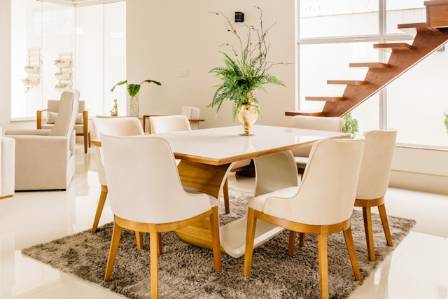
The dining table is the anchor. For 2026, prioritize warm wood grains or sleek sintered-stone tops with sculptural, art-like bases (pedestal or T-shaped legs). Soft oval or pill-shaped tables align with the trend toward welcoming curves.
Seating Solutions:
-
Benches: Free up visual space and improve circulation.
-
Upholstered Chairs: Offer comfort and soften the room's acoustics.
-
Corner Banquettes: Maximize seating and storage while creating a cozy, permanent focal point.
The Assembly Advantage: While flat-pack furniture offers initial savings, it often leads to frustration and instability. A fully assembled set, like the Hobart Minimalist Dining Table from POVISON, provides immediate functionality. Its sintered-stone top is scratch-resistant, heat-proof, and stain-resistant, embodying the durability required for modern family life without sacrificing refined aesthetics.
|
Feature
|
Flat-Pack Dining Set
|
Fully Assembled (e.g., POVISON)
|
|---|---|---|
|
Setup
|
Hours of assembly, multiple tools
|
Ready to use; unpack, place, dine
|
|
Quality
|
Dependent on user skill; visible hardware
|
Factory-built for stability and longevity
|
|
Aesthetics
|
Extra screws/joints add visual noise
|
Cleaner lines, seamless minimalist look
|
|
Experience
|
Instructions, missing parts, stress
|
Focus on styling, not complicated setup
|
Color, Material, and Light: The Sensory Layer
Move beyond flat gray. The 2026 palette features warm whites, mushroom beiges, caramel browns, and inky blues. Ground the space with a deep brown or charcoal rug. Introduce subtle contrast with forest green or blue in artwork or upholstery.
Texture Over Trinkets: Achieve luxury through material layering—a sintered-stone tabletop paired with linen placemats, a wool rug, and a ceramic vase. This creates depth without clutter. Sustainable, natural materials are key to this tactile richness.
Layered Lighting: A minimalist chandelier should be a sculptural art piece. Combine a statement pendant (slim black rings or delicate glass globes) with soft wall lamps and discreet recessed lights. Crucially, install dimmer switches to transition the room from bright task lighting for homework to a gentle glow for intimate dinners.
Styling: The Art of Curation
Minimalist decor is about editing, not deprivation. Start with a clear table, then add one or two meaningful objects: a sculptural bowl, a stack of linen napkins, or a single botanical branch. Every item should earn its place.
Wall Decor: Practice restraint. One large artwork, a pair of minimalist prints, or a slim shelf with curated objects is enough. Treat walls as negative space that highlights your furniture and lighting, creating a gallery-like calm.
Conclusion: Less Effort, More Living
A 2026 minimalist dining room is soft, functional, and deeply personal. By investing in a hero table, thoughtful seating, warm natural materials, and edited decor, you achieve enduring "quiet luxury." Opting for fully assembled, high-quality pieces reduces setup stress, freeing you to enjoy the moments that matter—gathered around the table.
2026 Minimalist Dining Room FAQs
Is minimalism outdated?
No, it is evolving. The trend is toward "warm minimalism"—clean lines enhanced by cozy textures and richer colors. Recent surveys indicate 56% of homeowners still prefer minimalist decor over maximalist styles.
How to make it kid-friendly?
Choose tables with rounded corners and durable finishes (sintered stone or sealed wood). Opt for stain-resistant chair fabrics and low-pile rugs. Utilize closed storage to hide toys and art supplies, keeping breakables on higher shelves.
Recommended budget allocation?
Invest 50-60% in the table and chairs. Allocate 15-20% to lighting, 15-20% to storage, and reserve 10% for decor and textiles.
Can I mix old and new?
Absolutely. Pairing a modern table with a vintage cabinet or an heirloom chair adds soul. The key is editing—keep only a few special pieces and maintain a consistent color palette for an intentional look.
How many chairs?
Plan for your everyday diners plus two. For a family of four, six chairs suffice. Store extras out of sight to maintain clean lines.
यह भी पढ़ें

en
Velocity Redefined: The World's Fastest Production Cars in 2025
Marcus Thorne

en
The World's Most Beautiful Coastal Towns and Villages
Henry Daniel Taylor

hi
इन 8 बीच पर दुनिया का सबसे नीला पानी है
सुनील

hi
अटलांटिक पफिन
वाणी

hi
2023 के लिए दुनिया में 10 सर्वश्रेष्ठ सर्फ स्पॉट
रेबेका पार्सन्स

hi
इंडोर में जल लिली उगाने और देखभाल करने का तरीका
साहिल